
We are accepting applications from students who wish to join our lab. [Updated for 2026]
On this page:
・About Our Research
- What kind of research do you do?
- Skills to be acquired
- We want students like this!
- Teachers are like this
・How to join Komatani Lab?
- Laboratory Tours
- Admissions Information
– Q&A
About Our Research
What kind of research do you do?
 NAO
NAOThis lab will help me talk with humans!
Join us in researching spoken dialogue systems.
Spoken dialogue systems are systems that use speech recognition technology to interact with people. Smart speakers such as Amazon Alexa and Google Home are also widely used today.
In our laboratory, we use speech recognition and natural language processing technologies to build new spoken dialogue systems and develop core technologies to solve problems therein. Errors are inevitable in speech recognition. In particular, humans do not rely only on sound. We also use visual information and background knowledge to distinguish speech even in noisy environments. However, current systems still lack such situational awareness and often make mistakes that humans would not. Thus, it is still difficult to create a spoken dialogue system that works in a real environment, but it is a challenge worth tackling. The more we try, the more we realize how casually and sophisticatedly we humans are processing.
Artificial Intelligence × Linguistics + Social Psychology
Our research is primarily based on artificial intelligence and natural language processing, while drawing insights from linguistics and social psychology. Knowledge is essential for dialogue systems, and rather than viewing dialogue simply as a mapping of output to input, the ability for the system to grow autonomously by making good use of existing knowledge or acquiring knowledge from the other party during dialogue is also essential for a “smart” dialogue system. Furthermore, it is also necessary to have the skill to ask this without interrupting the flow of the dialogue and without aggravating the other party’s impression of the system.
As described above, this research field has both the engineering aspect of writing programs and creating systems, and the science aspect of considering what it means to be able to “communicate”. Furthermore, since we are dealing with human language, we need to be exposed to linguistics, social psychology, and other fields of knowledge. If you are interested in what it means to be able to communicate with people, why don’t you join us in our research?
For more detailed information on our research, please refer to the “Research” page.
Research requires a more comprehensive set of skills than studying for exams or classroom studies. Therefore, the more diligent you are in your research, the more skills you will acquire, including the following. (It would be a waste to graduate/complete college without acquiring these!) In this laboratory, we will guide you to acquire these abilities.
*We do not explicitly mention speech recognition, spoken dialogue, etc., because it is natural that you will gain knowledge in those fields.
Ability to plan
Research cannot be done without planning and forecasting (estimating).
PDCA is essential.
Ability to explain
In meetings, you need to be able to accurately communicate to others the experiments you have done. The ability to accurately communicate something new, something no one else has done, to someone who doesn’t know about it.
Presentation skills
It is required to present the results of your research. It will also be directly related to job hunting. There may be a misconception that it is about the how-to of how to present, but the key is the what of how to organize, in what order, and what to explain.
Technical writing skills
Few people have ever written a coherent amount of texts before. Writing a paper is a valuable opportunity to have your writing corrected by others. By reading many papers, we aim to create writing that is “readable and conveys the content,” rather than writing “just write anyway,” as in a report.
Ability to think logically
This ability is also essential when planning experiments. For example, “conduct the experiment under the conditions that have been divided into cases without omissions”. Papers must of course be written logically. If you submit your paper to a journal article, you will need to respond logically to the points raised by the reviewers.
Ability to formulate unsolved problems
Research is the process of producing a certain objective solution to a problem for which it is not even known whether there is an answer in the first place. In the real world, unlike studying for an exam, no amount of solving problems for which the correct answer has been given will produce new value. Learning methodologies to tackle problems for which the answers are not known is what we should learn through research.
Although the above may be acquired in other laboratories, our laboratory is particular about correct Japanese expressions and how not to cause misunderstandings, since our research targets communication using natural language.
The general framework of our research field is artificial intelligence, which is softer than general engineering. Therefore, it is necessary to tell a story (persuasive power), such as why you are doing it and what is the benefit of doing so. These abilities are essential for job hunting and subsequent presentations in the workforce.
We are looking for motivated students who are eager to learn and grow!
I call this a “positive coefficient of the second derivative of the value of competence”. Since students are growing, we welcome students who have a positive coefficient of the first derivative of the value of competence and who are willing to “grow and develop” at an accelerated rate now (even if their current skills are low).
We welcome students who are interested in (not all, of course!):
- Building robots that can communicate with people
- Understanding human communication
- Applying programming skills to AI research
- Organizing new activities and events in the lab
- Pursuing a Ph.D. and conducting intensive research
- Being proactive and willing to take on new challenges
- Presenting at conferences in Japan or abroad
- Interning at industrial research labs during summer vacation
- Engaging in friendly competition with students from other universities
- Winning prizes at academic conferences and showcasing achievements
About the Professor
You may not have many opportunities to meet your advisor during undergraduate lectures, so please feel free to visit the lab.
Your research topic is important, but finding a good fit with your advisor is also an important factor.
Please make an appointment in advance by e-mail. Online interviews are also available.
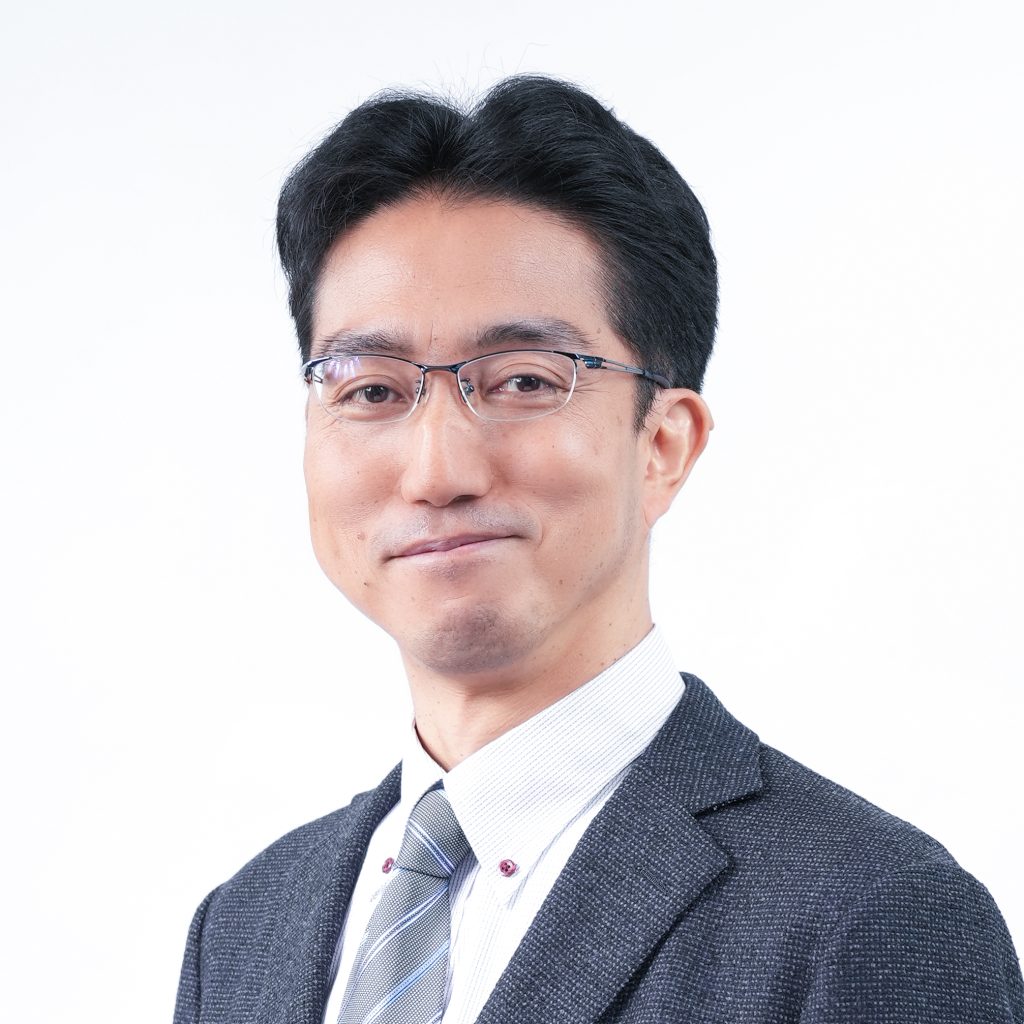
I was on my university’s rowing team and competed in the National Sports Festival of Japan, a major nationwide multi-sport competition. I also have seven years of experience coaching the rowing team.
I played percussion in a brass band during junior high and high school, including participation in the All-Japan Band Competition (often associated with Fumonkan Hall), a highly regarded national competition for wind ensembles in Japan.
As a member of the editorial board of the Japanese Society for Artificial Intelligence, I contributed short essays titled “Aspirations for This Year” (in Japanese):
「人間のようなターンテイキング」 人工知能学会誌 28巻第1号, p.22 (2013年1月)
「単に感情を表出する発話」 人工知能学会誌 26巻第1号, p.20 (2011年1月)
How to join Komatani Lab?
To join Komatani Lab, students should apply to the Information and Communication Engineering Course of the Department of Electrical, Electronics, Information and Communication Engineering, Graduate School of Engineering, University of Osaka.
We welcome students who are interested in and motivated by spoken dialogue, regardless of their university background.
Laboratory Tours
If you are interested in Komatani Lab, please visit our laboratory first!
Lab tours for 4th year students are held in early April every year.
For details, please contact us.
The lab tour takes place in Room N202 on the 2nd floor of the Nanotech Building.
Information Session for Graduate School Admission
The first graduate school admission information session for the 2026 academic year will be held on Monday, March 23, 2026.
https://www.eng.osaka-u.ac.jp/graduate/
*Japanese Only
A lab tour will also be available, so please join us.
The second graduate school admission information session is usually scheduled for early May. A laboratory tour will also be offered at that time.
Please note that the written exam subjects were revised beginning with the August 2025 graduate school entrance exam, with some subjects removed. For more details, please refer to the application guidelines.
For prospective students:
Before contacting individual faculty members, please first follow the official admission procedures of the University of Osaka and submit the required documents through the Admissions Assistance Desk (AAD):
https://www.osaka-u.ac.jp/en/international/inbound/dragongate
Only applicants who have completed the required document screening through AAD may be considered for further contact with the laboratory.
Please note that our laboratory generally does not accept research students. We consider supervision only after students have been formally admitted to the graduate program at the University of Osaka.
Due to the large number of inquiries, messages that do not follow the above procedures may not receive a reply.
Admissions
Basic information, including application guidelines, is available.
Q&A
Why are there so few students?
Since this laboratory belongs to the Institute of Scientific and Industrial Research and is positioned as a cooperative course in the Faculty of Engineering, the number of students is about half that of a laboratory belonging to the Faculty of Engineering. This means that the number of students is about half of that of a laboratory belonging to the Faculty of Engineering, and the ratio of faculty members to students is twice the usual ratio. In other words, I believe that this laboratory is twice as beneficial for those who are ambitious. On the other hand, I do not recommend it at all to those who just want to graduate or complete their studies with ease.
The word “research” doesn’t conjure up images for me. Is it any different from what we do until our third year of undergraduate studies?
The main focus of study up to the third year, including studying for exams, is to master what has been revealed so far. In other words, the direction is input-oriented. Research, on the other hand, is about tackling unknown problems. This is completely different from solving a problem for which there is an answer, and the main focus is on producing new outputs (creation, discovery, and proposals). Thus, the directions are completely opposite.
Clearly, the latter is what is required in society. No company would pay a salary to someone who just solves problem books or studies to obtain qualifications, right? In other words, your fourth year in a laboratory is a major turning point for you in the sense that output is required for the first time. It is dangerous for those who think that “studying = memorizing things so that you can get points on tests,” perhaps because of their successful experience in studying for entrance examinations.
And as those of you who are keenly aware may have noticed, output training requires you to receive instruction and feedback on your output. Imagine practicing your English writing or speaking skills. For those who want to be well guided at this turning point, our lab is a good option, in my opinion!
What difference does it make if the lab belongs to SANKEN? Is the location far away?
Regarding the first point, the location is across the street (north side) from the E building group of the Electrical Engineering Department. The second point does not particularly affect the students. The second point does not affect students in particular, only that the number of students is a little smaller and the buildings are a little farther apart. On the other hand, Sankyo has its own events (SANKEN Festa and Genghis Khan Party). Although our laboratory did not participate last year, a futsal tournament is also held.
Do you have long lab hours?
We do not intend to “lock you in,” but you do need to develop habits to keep your research steady. You need to be able to discipline yourself. If you don’t come to the lab, your research will not progress, and you are missing out on a valuable opportunity to develop skills at the university. Also, if you come to the lab and no one is there, it is no fun, right?
In addition, extracurricular and club activities will be considered if discussed with you. Of course, in that case, you must try to recover at another time that is convenient for you.
Do I have to be able to do programming?
Yes, it is necessary to be able to program. Of course, it is better to be able to do so. However, as with other skills such as English, it is important to try to train yourself further. If you don’t use it practically, you won’t learn it. For those who are good at it, this is a chance to make use of that weapon.
What is the weekly schedule of events like?
We have a general meeting and a detailed meeting for each group, each about once a week. In addition, training for newcomers will be held at the beginning of the assignment. Voluntary study sessions are also welcome. We also hold a luncheon once a week.
On the other hand, from the beginning of July onward, we will ensure that fourth-year students who will be taking the graduate school exam have a period of time to concentrate on studying for the exam.
Where can I find a job?
Our laboratory does not offer job placement services, so there are no “only in this laboratory” employment opportunities. Guidance on employment is provided on a departmental and major basis.
However, it is clear that finding a job is a point of passage, not a goal. In order to be able to work wherever you go, you should train the above-mentioned skills in the laboratory. It is important to develop the ability to think and make decisions on your own, rather than just doing what you are told.
What kind of events are there?
We have various drinking parties during the year, such as a welcome party for new students, a party for those who have passed the graduate school examinations, and a year-end party. In addition, the SANKEN, to which we belong, holds events such as the SANKEN Festa. We are always looking for new projects. We believe in “play hard, learn hard. It is also important to have the skills to make arrangements.
We also have opportunities to interact with laboratories from other universities (around July and December), in the form of Kansai Voice Joint Seminars. You should also actively participate (present) at academic conferences.
I am an undergraduate student at another university. I would like to do research on spoken dialogue.
Yes, you can. We welcome students who are interested in and motivated by spoken dialogue, regardless of their university background. Please contact us first.
To enter our laboratory, you must apply to the Division of Electrical, Electronic and Infocommunications Engineering of the Graduate School of Engineering, University of Osaka. Please consult with us about admission from the doctoral course.
For inquiries regarding admission or joining the lab,, please first follow the official procedures of the University of Osaka and contact the Admission Assistance Desk (AAD).